Showing posts with label slow living. Show all posts

Friday, January 26, 2024

How to be happy and frugal: Fix Things!

 If I think of the things which make me very happy the list is long, and one of them is absolutely the delight I feel when I fix something. The sense of achievement is a real ego booster. What was a problem has now been solved. The item is useful again. In turn this is a big money saver- as well as a way of preventing things going to landfill. I think this is compounded for me by the sense of agency- as a girl I was not expected to do more than cook or sew, but give me a drill and a hammer and I am powerful! 


For instance, today the youngest grandchild noticed letters in the letterbox, and wanted to get the key and get the letters. When you are 6 this is a grown up, independent and helpful thing to do.

 The problem was that the key would not turn in the lock. We knew it had been getting worse, but had  done nothing  about it but jiggle jiggle jiggle everytime we wanted the lock to turn. Today it was a serious problem for Mr 6, and today it took just a squirt with a can of silicone spray to lubricate the lock and make it good for another 6 months. At the same time DH sprayed the tracks in our outdoor blind and made them smooth and easy to use too.  

Some kind of hardware style lubricant is a good thing to have in any 'fix it' kit. Other items might be strong glues of various kinds, a screwdriver or two, some strong adhesive tape, a couple of permanent markers for covering scratches, maybe a clamp to hold broken pieces together as they cure. 

Do you have a fix it kit? I wonder what you would include in it? 


In our hot climate an automatic reticulation system is essential in a garden and because we have a drying climate we use drippers and microsprays. Sometimes these get clogged or broken and a plant will be struggling. Yet it is a task of just moments to replace the broken part and get everything working again. We keep reticulation parts for exactly that reason, in our shed. 


We use two clothes lines outside -the kind we call 'parallines"- a rectangle hung on a wall with lines of wire to hang the clothes on, making great use of limited space. Recently the most used one -up in the sunshine and the wind-had its wires fray and snap. I took a piece of it with me to the hardware store and found a replacement bundle of wire, then worked out how to re-string it again. Not difficult, but so practical and useful. 


I did the same with the lovely windchime which announces the arrival of our sea breeze. Recently it fell with a clang because the fishing wire which holds it up had broken. I found some galvanised wire in DH's shed and made it secure again. 

A common issue in households are things which use batteries, because they stop working when the battery has to be recharged or replaced. One very aggravating place to have battery failure is the computer wireless keyboard, because you can't do anything until you replace the battery -and the batteries for mine are AAA -the very small ones, not used for anything else around here. Other things in our house which use batteries are wall clocks, torches and hand held devices. If you have little children you may have night lights, toys and games which also need batteries. 

 We keep a selection of battery sizes on hand so we don't have to run to the shop at awkward moments to get a new battery. This is just a bit or regular household 'magic' that can de-stress an awkward moment and sometimes be a big thing. We recognised this week that our battery stash is a bit scattered. Maybe I should try to find a good receptical and bring them all together so that we don't do a mad scramble when something dies. Nearby could be a place to stash used batteries, so that I can take them for recycling (they should never go in landfill!).


One major cause of frustration is anything 'remote controlled' -including TVs, garage doors, etc.  Our CD player is used daily during our morning meditation, and has a remote control. Just replacing the battery gives a moment of joy when the click starts our Hilda of Bingen music.


DH keeps a pretty well resourced handyman shed. Now that his knee replacement is behind him, he is back to tinkering in the shed again. One of the projects on his bench at the moment is a wheeled plant pot stand. It got buckled because I put a heavy pot plant with a ficus benjamina in it on the stand but it was too heavy. I like to have wheels on that pot plant so I can turn it around and keep the tree symetrical as it responds to the light. DH is going to reinforce the pot stand with a scrap piece of wood so that it can be used again, and we don't need to buy a new stand. This will require a bit of nifty cutting with one of his favourite tools -the band saw. 


We keep warranties and ownership manuals in plastic pockets in a lever arch file. This has been invaluable. 

  • Why is that light flashing on the induction stovetop? 
  • How do I clean the exhaust fan over the stove? 
  • Can I fix the dishwasher by buying a new part? 
  • How do I program this new appliance?
 Lots of things can be solved by reading the manual. If you can't solve it sometimes you can find the address of the supplier/manufacturer and order a new part which will solve the problem. If you have bought an appliance second hand you can often get a manual online. I did this recently with my new-to-me icecream maker.


If not, there are many good videos on the internet which will show you how to fix a lot of things. 


Then of course there is the good old 'tie it up with wire' approach, time honoured in the song True Blue by John Williamson. The real masters of this approach are the stars of Bush Mechanics -a humorous TV show about First Nations people hacking cars in the outback to keep them functioning 'some how".  For these times, a creativity and a 'she'll be right' approach can be what is required. In the garden, my cable ties and bits of scrap wood  or tree branches can make a whole lot of useful shade in a temporary arrangement, like this I have made at the east end of a struggling garden bed, when I realised the hot morning sun was making the silverbeet struggle. I just cut a couple of branches of bamboo and cable tied them to the end of the bed. Instant shade! Not too dark, and no money required.


Then there are the things you might find in an op shop, or a skip, or offered for free from a neighbour. They might be a bit battered, or neglected or broken, but maybe you can fix them and get more life out of them? 

We bought a rather battered old dining table at the tip shop for about $10. DH thought it was 'good wood' underneath, and had an idea. He cut down the legs, sanded and smoothed the top, turned some of the boards around...and then we have this fabulous coffee table. He used a waxed finish, so that anytime its life has been a bit rough, we can get the wax furniture polish out and buff it up again. We both love it. 


We also try to keep a list of repairers and general 'fix it' helpers -the computer shop which is able to replace a mother board, the sewing machine mechanic who can source old parts, the 'guy up the road' with a history of fixing garden equipment, all sorts of helpers. In Australia if your spectacles are broken, you can take them to any optician and they will fix them on the spot, usually free of charge. These people are rare and valuable. 

Finally a thought from Brenna Quinlan, Permaculture illustrator and teacher


So, save money and be happy: Fix Things! 


Wednesday, November 1, 2023

Getting ready for summer -it is going to be hot and dry

It didn't take long for the winter rains to dry up here in Perth. Far too early, for me, the forecasts began to be for weeks of no rain, and in this Mediterannean climate that could go on until March. 

The sandy soil dries out quickly unless mulched and shaded.

What is even more concerning are the reports and predictions that this summer will be hotter than ever, and the sea temperatures hotter also.  The toll on our environment is going to be a major concern.  

Click here for the BOM prediction of hotter, drier weather in Perth  https://www.abc.net.au/news/2023-11-01/el-nino-weather-pattern-in-wa/103032024

 
About two years ago, Perth and the South West had one of those 'heat bubble' type of weather patterns. The accustomed afternoon sea breezes never arrived. The houses got hotter and hotter and had no time to cool down before the next hot day arrived. It was just after Christmas and went on for about 10 days. 


All the passive cooling strategies we had set up around here, all the shade sails and grapevine pergolas, all the ceiling fans were suddenly not enough.

It was hard to sleep.

Plants died in the heat. Trees were stressed.


We went to the shops to see what we could add to the house to help cool us down. They were selling out of anything which might cool people down - fans, portable air conditioners, the lot. The sales staff confessed the warehouses were empty and that even if you could buy something more permanent like an evaporative air conditioner, there were no installers free to put them in. One guy said his own flat was too hot to sleep in. 

In the end we got a house wide evaporative air conditioning system installed in March of that year, and we LOVE it. In our dry climate it works really well, is very cheap to run and if there is any run off I was able to put in on the garden via a low-pressure sprinkler. 

There are times, however, when we know this system won't be enough. If there is a lot of smoke due to bushfires, or if the humidity is too high, you can't run the evaporative air conditioner. It is not normally a problem in Perth, but the climate is changing! 

We saved up for months, and this week we put in a couple of Reverse Cycle Air Conditioners. They are in the bedrooms. This is so that we can ensure a good night's sleep, and we can always retreat to the bedrooms if the rest of the house is too uncomfortable.

DD is also happy that it will also give her a heater for the winter time. These RCACs are efficient but can be noisy, especially for neighbours. In the process of cooling rooms, they vent hot air outside, which makes the problem worse for our cities. 


Apart from this, I am working hard to get the garden ready for the summer. The reticulation is always in need of some tweaking after winter. I have shade on the veggie beds. I try to grow climate hardy plants, but in summer there is really not much which will survive a 45C day, especially if it goes on for weeks. 

Of course, some of these strategies are not available to people who are renting. There are landlords who do not even have insulation in the roofs of places they let out, and in this climate it should be mandated by law. 

I support the team of activists at Better Renting . Better Renting is a community of renters working together for stable, affordable, and healthy homes. They are doing a survey this summer of the type of conditions renters are facing, and also will be providing strategies for those who are too hot in their rental. Click the link to find out more. 

Meanwhile, I have found some tips for renters here from Milkwood -and they are really practical. 

 https://www.milkwood.net/2022/10/10/rental-permaculture/?fbclid=IwAR3gSv5SRP-RpaeRa-WxkQ9rq0XrPmZ07lugZyteNMPN-1_Qc7VBReBxZdM


Thursday, August 24, 2023

It's here! First days with the EV


We picked up and registered our EV (Electric Vehicle) today and I have had my first drive in it! It is a Nissan Leaf. 

(For the leadup to this post, see the last one here)

There are many feelings involved!

There is the novelty of a new technology, because this is like having a mobile computer. There are displays, cameras, readouts, switches, toggles, modes -so much information at hand. It feels supportive- five camera angles to help you park, warning alarms for all sorts of things -"you wouldn't be silly enough to do that thing, would you?" kind of noises. There is a warning beep when reversing -because the car is very quiet, and people need to know you are coming. 

The first drive in any car is exciting. The first drive in an EV even more so. It is quiet -it is powerful-it is just like any car, but not like it at all. Now, I still have to figure out how to find my favourite radio station, and which of those switches turns on the aircon? 


There is relief. Did you know that we acually bought this car on the internet? 

As a result of Australia's geographical size and stupid car policies which do not promote electric vehicles at anything like the rate we need to decarbonise our future, there is almost no second hand market for EVs, and new ones are hugely expensive and have a wait list. We found the Good Car Company could import vehicles from Japan, second hand, at reasonable prices. We bought and paid for the car weeks before it arrived in Perth, as it had to be trucked across the Nullabor, and then we had to register it in this state. I must say, all the way along that the Good Car Company has been very helpful and supportive. There were moments of doubt however, and the relief is real. 

There is satisfaction. DH went to put a few $$ worth of fuel in the ICE vehicle we are selling, and had great delight in saying "This is the last fossil fuel I ever buy!" For me, this is the culmination of a dream more than 5 years old, to say goodbye to fossil fuels and drive a clean green car. We sold our ICE car! 

There is excitement.

Friends and family are very interested in the new vehicle because, unlike countries overseas, EVs are relatively rare in Australia and most have never seen anyone who fairly ordinary, like us, with one. We are fielding many quesions and enquiries, which is great. The more the merrier! 

But what about RANGE ANXIETY?

Well, yes, it is a thing for new EV drivers to be constantly aware of the approximate number of kms left in the battery before recharging, because, unlike ICE  (Internal Combustion Energy) cars, we can't fill up on every corner at the fossil fuel petrol station. 

We are learning to drive in such a way as to enable as much recharging of the battery as possible. This is due to regenerative braking. As you slow the speed of an electric vehicle, regenerative braking engages the motion of the wheels to act as a sort of crankshaft, sending energy to the motor via rotation of the motor shaft. The Nissan has several driving modes to promote this regeneration, one exiting one is a 'one pedal drive' in which you don't use the brakes at all!!!

This means that, unlike an ICE vehicle, the car can top itself up a little instead of just running down the fuel/charge gauge. For example, yesterday afternoon we travelled about 18 km in city driving, but when we the car dash suggested we had used up only about 11 km of range. 

Our own Power Station

It took a few days before we could perform our first recharge at home -because of course, the battery needs to have some capacity used up first, so that we can, actually, have room for more charge! This was a new skill-but it was very easy to do. DH was greatly relieved that the set up we installed a month or so ago, actually works with this car. I was relieved to know that we can power up the car at home, easily and whenever we need to.  


Charging an EV takes some time, compared to the 10 minute approximate filling up with a fossil fuel in an ICE vehicle. 

If we stop at a public EV charger, we can do a rapid charge which may take up to 30 minutes. Too slow? But it will cost about one third of the price of the fossil fuel! 


If we charge up at home on a medium speed it will take about 5 hours or so, but as the car sits outside for many hours per week, it is hardly a big problem. We will be strategic about charging up where possible when our solar panels are pumping the most electricity, and when the household is relatively powered down. For example, we wash clothes in the morning so the car is going to be cheapest if we wait until the afternoon. I will be keeping track of our use, and comparing the price on our power bills. 

Our first charge took about 4 hours, at home, while we were eating dinner and reading books. We had planned to do it earlier in the afternoon with the sun shining on the solar panels, but we had to get a grandchild from school who was unwell, so we did it in the evening fron the grid. We calculate that would cost about $10.

In Australia,  a car is typically parked at home 80% of the time according to statistics here. 


The car has a nice roomy boot, deeper than normal because it doesn't have a spare wheel. What it does have is one of those repair kits for a puncture which squirt some kind of jell into the tyre. You then go to a shop and buy a new tyre! 

So, now we are driving emissions free. Australia needs to do this quickly to meet our emissions target. I hope this experience of ours will give confidence to others to consider an EV the next time they need to change vehicles. 


Saturday, April 1, 2023

Djeran - Seasonal changes, and a catch up


 GARDEN

It has been pretty obvious that we have slid towards Djeran -the local Noongar season which we would think of as Autumn. Nights are getting cooler -down to around 18C, and we have had one significant rain event. When you have a summer drought as long as we have each year, the first decent rains are very welcome. As soon as the dust is washed off the leaves, and the ground softens with moisture, all sorts of plants emerge from their summer half-hibernation and begin to get leaves growing. My water tanks were pretty low, but the 1500 litre was full after a night of rain, and the 3000 litre is about three quarters full. 

The shade sails and other shade structures are coming down, as I work my way around the garden. 

I have been harvesting limes, quinces and pomegranates. There is a pot of quinces on the stove right now, slowly turning pink and perfuming the house with fragrance. Our newish apple tree has tiny apples on it.

There is a lot of basil, which means that we are making batches of pesto and freezing them for later use.

Autumn is a time for sowing seeds and taking cuttings. I am watching with interest my experiments with duranta and curry leaf tree cuttings, and have sown calendulas for the bees. 

 FOOD

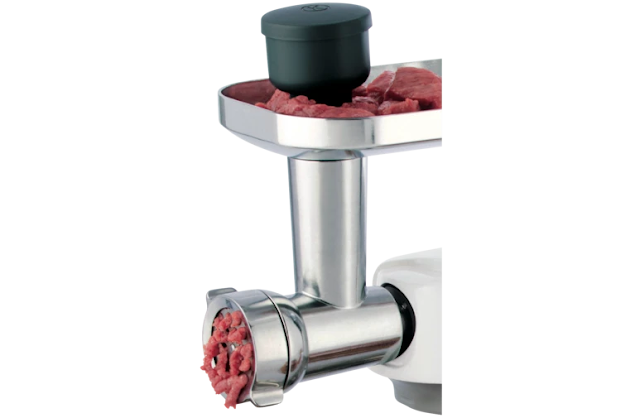
Inspired by the podcast "Eat drink  cheap, I have been getting used to making sausages, using the fancy attachments I got for my Kenwood Chef for Christmas. This time I had sausage casings, so that took the process up a notch or two. 


CAT

Dora has returned to her favourite spot on the table in front of the window in my sewing room. It is too hot here in the summer, but with the cooler weather she likes to watch the birds come to the bird bath in the garden. She is still holding her own as a teenage cat, with the help of a bit of vetinary medicine. One day I was delegated with the task of taking her for a checkup. Somehow she must have picked up a vibe, because when I needed to load her into the cat carrier, we found her hiding in the depths of an inaccessible part of the storage cabinet under DD's bed, and would not come out. DH has more success at this than I do, so he took her a week later, after we barracaded her into a room with fewer hiding spaces. 


QUILTS

While the weather holds, I have used the outdoor table to pin two quilts together. This one was made with scrap fabric printed with all kinds of music motifs. It is now pinned together and waiting for me to start the free motion quilting on it.


The other is a scrappy which I have now given to the WAQA Community Quilts group for donation to refuges and such facilities. I am grateful for this "potato chip block" design -it was so easy that the quilt came together really easily. I cut up a lot of scraps from previous projects into either 2.5 inch squares, which I will use later, or these 2.5 inch by 4.5 inch rectangles. The tidiness of the quilting room is an added bonus. 


DH and I had a lovely day travelling to Harvey in the south west, about an hour and a half from here, to attend the Quilt and Craft show this month. As usual, the quilts were very fine -here is just one example. We love to have lunch in a country cafe where they still remember how to make a decent salad sandwich with all the fillings, and then go and enjoy the craft show for a gold coin donation entry fee. 


The label below tells us who made it and how. 


VINTAGE SEWING MACHINE

I have added a new-to-me sewing machine to the fleet of vintage sewing machines. Read about it here.
Vintage sewing machines are repairable and serviceable by ordinary people -there are no computer mother boards to fail. I love the sound of them and the feel of them when I sew. The extra bonus is the feeling of empowerment when I solve minor technical problems with a pair of tweezers, a drop of oil or a minor cleaning. 

MUSIC

Well  I think we have bragging rights on this one, for sure. This month, we had a wonderful afternoon with the Metropolitan Symphony Orchestra, when they played our son Ben's composition Karinup fanfare. Listen here  


This blog is my record of our simple life -but it is so nice if others visit it too.Thanks for reading. 


Sunday, February 12, 2023

Bunuru - a celebration of many things!


It has been a succession of celebrations around here since my last post. Our son and daughter in law graduated with master's degrees in teaching from ECU and our daughter graduated with a Grad Dip in Information and Library Studies from Curtin. These were very happy moments of recognition of a lot of hard work and it was lovely to be able to celebrate together.
I love graduation ceremonies. Each person who crosses the stage has a whole story of struggle and achievement. The whole thing is full of hope in a way that is not often found. 


Our youngest grandson needs a pick up and delivery to a group event on a Thursday afternoons every fortnight. This gives DH and me a chance to spend some hours in the vicinity of the beautiful Swan Valley. We love this little cottage cafe in the middle of the vines, and take time to sit under the fig tree and enjoy our afternoon together. There are great plant nurseries nearby, and on-farm produce sales, and lots of wineries. We will be trying to make the most of our fortnightly visits out this way this year. 


I was very happy to get back to the West Australian Quilting Association monthly meeting after nearly a year. The whole thing is very inspirational. Here is the display of quilts donated to the Community Quilt group for donation to hospices, shelters and other needs in the community. I have now started my annual quilt for this group. 


This is the beginning of the donation quilt -potato chip blocks from a whole bundle of scraps that I cut up into 2.5 inch x 4.5 inches and have started sewing together. I am really enjoying the project and it is good to get my 'sewjo' back. 


I enjoy borrowing cookbooks from the library. Sometimes I make a recipe from them, sometimes I actually go out and buy the whole book! One such book I recently bought and will heartily recommend is the book Use It All The Cornersmith guide to a more sustainable kitchen.  (no affiliate link). 

Of course, sometimes it is just a matter of revisiting cookbooks I own, and trying something new. We have a small group of friends which meets on Friday nights where possible, to eat together. We each bring a course, and that way it makes it easier for the host. These brownies (without the hibiscus leaves!) were well received. The book is Annabelle crabb and Wendy Sharpe's book "Special Guest -recipes for the happily imperfect host". (no affiliate link). 


My DH painted my sewing room door and installed the perfect sign! For a quilter who loves vintage sewing machines it is a wonderful thing and it gives me joy. I have a whole page on this blog about my machines here


Giving me joy is the health of the indoor plants I am gradually collecting around here. While summer sees some of my garden under stress outside, and I am battling pests and fungus and rats (grr!) I find that it is important to allow the season to be what it  is, and to sometimes retreat indoors and just read books! I trust you are also finding moments of joy and celebration in your life. Maybe leave a comment and let me know? 


Monday, January 2, 2023

New Year, old me, same slow living

 Welcome to my first blog post of the New Year and thanks for visiting.

One of the things which happens at the end of the year is that we have lots of birthdays to celebrate, including mine. I always start the year officially older. Our celebrations of Christmas and New Year always spread over several days, to try to give the birthday girls a moment in the sunshine too. We had lunch with friends and lunch with the adults of the family, and a picnic afternoon tea in the park with the grandchildren, just for birthday celebrations. 

Did you give and receive presents recently? One of the things now residing in my house is a new attachment for my Kenwood Chef- it is a food grinder. 


The reason this grinder was on the Christmas Wish list is that I was interested to go further with my experiments in building skills for slow food, slow living. The questions was, would it be cheaper to make my own mince and sausages?  The 2.3 kg pork shoulder I bought was $20. Pork sausages are about $8-9 per 450g this week so making my own would save about half the money of buying 2.2 kg of sausages. (I am using for this example good quality sausages, not the cheap 'goodness knows what is in them' kind). 

I tried it for the first time this week, making a boneless shoulder of pork into mince. I then made meatballs with some of it to serve with pasta and tomato sauce, and froze the rest. I have some sausage casings on order -it will be interesting to see if I can manage the process of actually filling the cases and making sausages. I am also looking into what else I can make with this attachment. The process, though slow-ish, was enjoyable and I will certainly go further with it. 


I already have established several old timey sorts of habits and skills - I can make a pretty good sourdough loaf, most of my cakes turn out fine from scratch, I am now a regular pastry maker so pies and flans are often eaten here. My husband makes yoghurt and jams and chutney. There are pickled onions and pickled vegetables in the fridge for summer salads, which we made ourselves.


Of course we also try to grow food in our suburban garden, and whilst there are some successes -the blueberries have been fabulous-there are also failures. No strawberry has ever made it to ripeness in my garden without some pest eating it before I did! After several years, the mulberry is now producing decent fruit, and the rhubarb we pick is now both chunky and red. 

Summer is well established now. The rains have gone, my water tanks are half full, and the irrigation is the focus of our garden survival. DH thinks we need a new solanoid thingo  and a new controller for it. Shade has been spread around to help everything cope.


DH is a partner in the old fashioned skills, with his fabulous set of tools in the shed. Today he is working on my sewing room door, repainting it after sanding and making it nice again. I have a new sign to go on it when it is done. 


The grandchildren have a swing set in their garden, and one of the components that they loved was a stand-on swing. On Christmas Day it broke, so we brought it home and DH made a new piece for it out of wood, and sealed it. It was a bit tricky due to the ropes involved, which he did not want to undo, but he worked out a design which enabled the new wood to be inserted without undoing the ropes at all. 


The thing about this kind of slow living that many people comment upon is that it seems like a lot of work, and that they don't have time. Yes it is work but my feeling is that the work is the kind that gives deep satisfaction and a sense of accomplishment. How else should we fill our days, except with the stuff of being independent and resourceful and practical, about the things which go to a good life without consuming more of the earth's resources than we need or can afford? Now that we are retired, of course we have more time to devote to these things. It would be hard to live like this  in the conduct of a full time job and with young children, unless something were to change -if you could afford a part time job, for example, or if finally the kids were in school all week. 

Finally some resources for you:

Jill WInger the Prairie Homestead - https://www.theprairiehomestead.com/author/jill


Tuesday, October 25, 2022

Food security? Small and slow solutions

 Spring has arrived and we are as busy as can be, whenever the weather is good. With drier weather, and occasional warm days, we are feeling the need to get stuck into some jobs which always come around in spring. With our Australian economy dealing with global energy spikes  and the poor farmers of the eastern states being flooded -some for the second or third time this year, our fruit and vegetable prices have gone up by 14% this year. 


DH renewed the oil on the outdoor furniture. This is a preservative and it gives us a chance to make sure the furniture can stand another year of outdoor living. 

The garden is busy! We flushed the reticulation pipes and repaired the spots that had got broken since it was last used. The reticulation is now on again, two days a week. Our gardens have to be hardy in this climate! I water pots if they need it, and about once a week I water the non-irrigated front verge if anything is looking distressed. The plants out there are chosen for their ability to survive once they have had their first summer in the ground. 

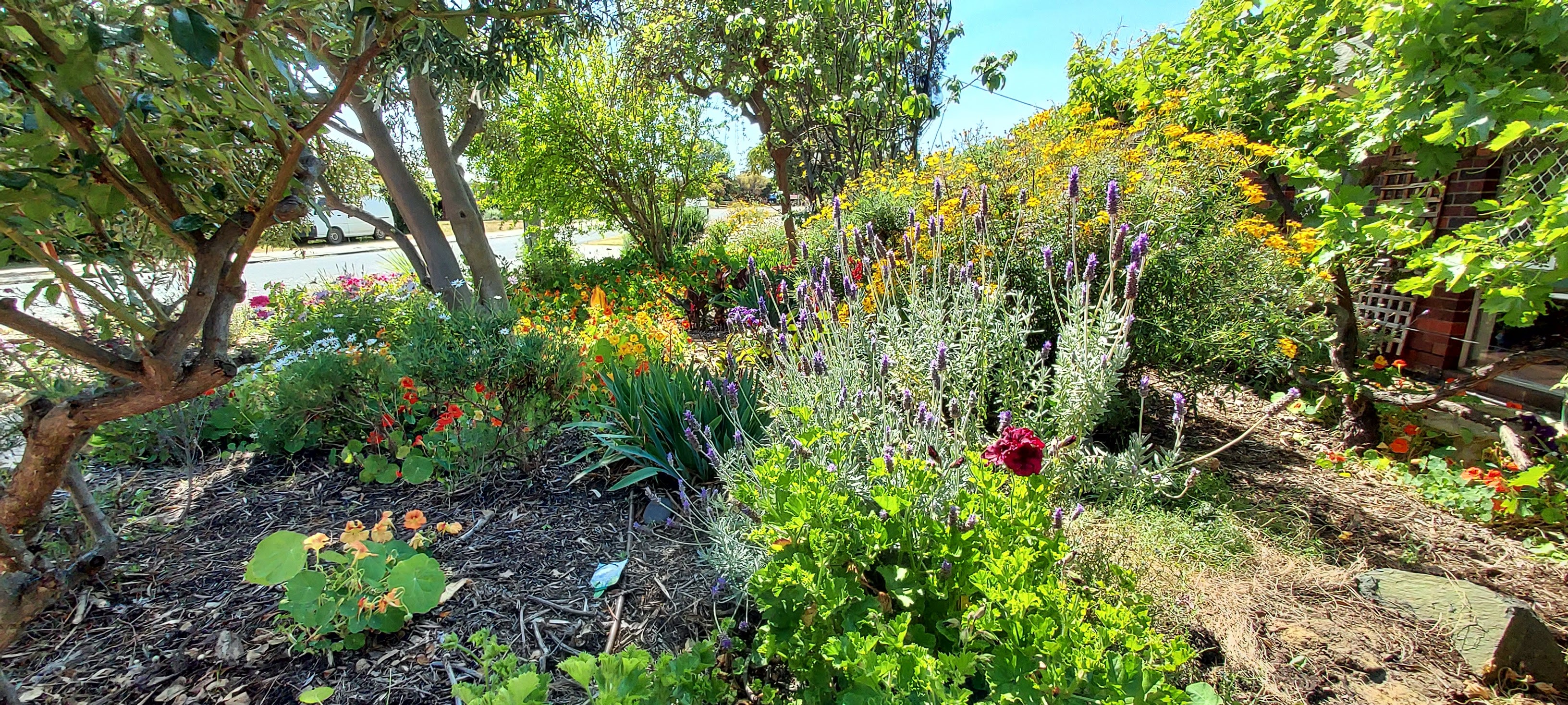
As the annuals in the front garden start to dry off, I am planting perennials like pelargoniums in their place. I have dug up some iris corms and replanted them in other spots. There is warrigal greens ( a native edible)  growing as a ground cover in the front garden too. This garden is both a food garden and an ornamental one. We have a pomegranate, olive, mulberry, lemon and two grapevines here. Tomatoes come up in the compost and I let them grow. Maybe in the future I will be wanting to grow more food out here too. Pumpkins could ramble along under the trees. 


As herbs and flowers are in their prime now, I am drying some and also making sure I leave some to go to seed. I have coriander hanging up to dry, to harvest the seeds for my curries. Lavender is drying to perfume new heat packs which I will stuff with rice.  Mint is known as a good help for digestion and can be good for the brain too, I understand. These may be small harvests, but they are very welcome in my kitchen. Calendula petals can be in a healing salve or tea, or added to risotto. 

 I find herbs to be a very worthwhile group of plants to grow. They are expensive to buy in the shops when you just need a bit for a recipe, but most are very hardy in the garden. Once you have planted them you have fresh herbs for a long time, and they really make a difference to the flavour of the dish you are making. Many of them contain important nutrients too. Herbs I grow include  Basil, Borage, Calendula, Chilli, Chives, Coriander, Curry Leaf, Lavender, Lemon Balm, Lemon Grass, Mint (four varieties), Parsley, Rosemary, Sage, Thyme -2 varieties, Verbeena. Most of these grow easily from cuttings so I can give them away for other gardeners to enjoy. 


Mizuna and blueberries 


The garden bed which lines the fence near the driveway is an important garden space. Here I have curry leaf, rhubarb, blueberries and chilli. 

I have planted tomatoes in all sorts of places and I am experimenting with various kinds of supports and feeding regimes. Nearly everyone says that you should not 'over feed' tomatoes in case you just get leaves and not fruit. Jackie French, the Australian gardener, novelist and all round nice person, says the opposite, so I am trying that out in one pot by adding compost and lots of mulch around a cherry tomato plant. 

We are picking asparagus and rainbow chard and cherry tomatoes. The blueberries are a few days off ripening. I had a lovely big handful of rhubarb with bright red stems from my oldest pot this week. 


There is a mulberry tree on the verge near a park in our suburb. DH brought home half a kilo of ripe berries from his walk today! This is very welcome, as my new FODMAP friendly diet requires me to eliminate some common fruits, but the good news is that berries are fine! My grandson had his first ever mulberry today, and announced that he loved them- and why not? As an urban forager, we know that the polite thing to do is to always leave some for the next person who comes along. Meanwhile our own mulberries are weeks away from being ripe. 


This week we will be helping our grandson plant carrots, sweet potato and snow peas at his place.
In the kindy garden where I am a volunteer, we have rainbow chard, rhubarb and strawberries. 
I love helping people discover the joys of growing a little something edible, and hope to inspire a long lasting journey into growing some food to improve food security.
I am also supporting a little "street pantry" where the community leaves food for others, no questions asked.

A lot of people in Australia are food insecure. There have even been cases of scurvy and malnutrition. I would like to think that those who can squeeze a jar of soy bean sprouts onto their window sill in the kitchen, or a pot with rosemary or parsley on the balcony, would be able to get just a small amount of extra nutrition as a result. It is not necessary to use a lot of money to do this -you can grow things in old tins and styrofoam boxes, and just straight in the earth. Compost can be made in a bin or a bag or a bucket with an old house tile as a lid, and compost is what most plants want to grow in.

The only way for people to be food secure would be for the rate of social security to be raised substantially -but that is sadly, unlikely to happen this year. 

Inspiration for hard times: simple ways to garden without spending lots of money  

Make a wild food map of your area here 

Food insecurity in Australia -read here